Vice President, Individual Life · Frasier Fontaine & Kong

Financial protection, built around the way Caribbean life actually works.

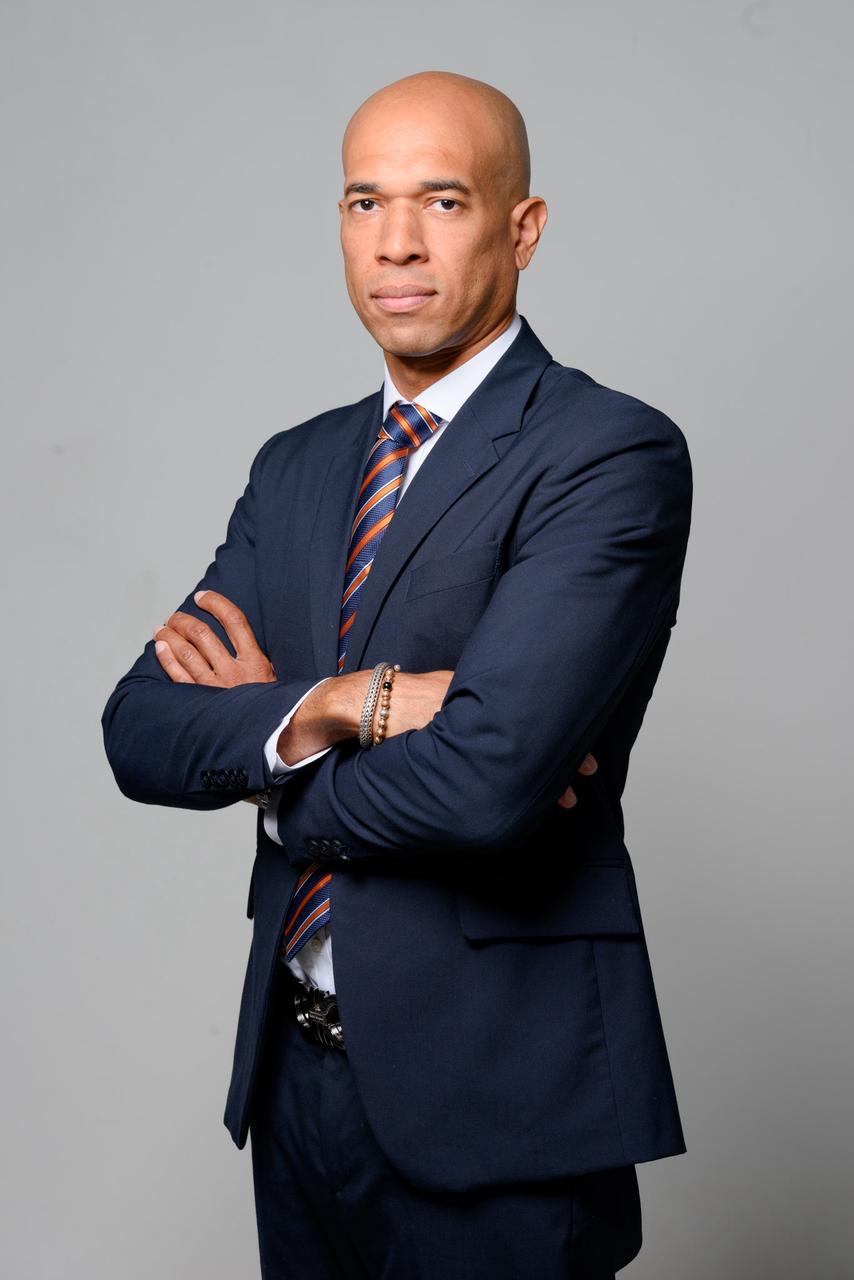
Vice President of Individual Life at Frasier Fontaine & Kong, and leader of the Spartan Sales Force, Christopher D. Lawe designs protection strategies that are practical, responsible, and built around the actual realities of Caribbean economic life, for families and businesses with no automatic safety net to fall back on.

Christopher D. Lawe
Vice President, Individual Life Leader, Spartan Sales Force Author, Organic Success
About

One of Jamaica’s most respected voices in financial protection.

Christopher D. Lawe
Overview

As Vice President of Individual Life at Frasier Fontaine & Kong, Christopher D. Lawe oversees a high-performance portfolio spanning life insurance, income protection, critical illness planning, retirement strategy, keyman coverage, and business continuity. He leads the illustrious Spartan Sales Force, a team of professional financial advisers whom he recruits, develops, and holds to the highest standards of practice and client service.

In a sector that too often speaks in jargon and abstractions, Mr Lawe has built his reputation on clarity. He works with professionals, business owners, and families across Jamaica to design protection strategies that are practical, responsible, and built around the actual realities of Caribbean economic life, where there are no automatic safety nets, where the primary earner’s income is the household’s only cushion, and where a single illness, accident, or unforeseen loss can unravel a lifetime of effort in months.

Christopher D. Lawe
Financial strategy, properly structured, should do two things at once: protect against the worst that can happen, and create the stability from which better long-term decisions become possible.

On International Insurance Day, Christopher Lawe speaks not as a company representative but as a national voice on an issue that is quietly urgent: Jamaica’s chronic protection gap between what Jamaican families and businesses are exposed to and what they are actually covered for. It is not a product problem. It is a conversation problem, and one he has dedicated his career to advancing.

Areas of Expertise

Protection built around Caribbean economic reality.

Life Insurance

Coverage engineered to replace what a household depends on, not just what a policy pays at the end.

Income Protection

Replacing earnings when illness, injury, or disability, not death, is the far more likely disruption.

Critical Illness Planning

Capital triggered by diagnosis, so a serious illness doesn’t double as a financial collapse.

Retirement Planning

Long-horizon strategy built to hold its value across currencies and market cycles.

Keyman Coverage

Capital to recruit, retain, and reassure when the one engine a business runs on fails.

Business Continuity

A documented, funded answer to what happens when disruption arrives, not an improvised one.

Generational Wealth

Structures that protect what’s been built and carry it forward, deliberately, to the next generation.

Adviser Development

Recruiting, training, and holding the Spartan Sales Force to the highest standard of client advocacy.

Credentials

Five designations, decoded.

Representing the highest levels of professional certification available in the life insurance and financial services industry.

LUTCF
Life Underwriter Training Council Fellow
A NAIFA-conferred designation in practice management, life insurance, investment products, and risk, wealth, and estate planning.
ARA
Associate, Reinsurance Administration
A LOMA designation covering reinsurance principles, agreements, and the administration and auditing of reinsurance business.
FLMI
Fellow, Life Management Institute
LOMA’s advanced, university-level fellowship on the management side of life insurance and financial services companies.
AIRC
Associate, Insurance Regulatory Compliance
A LOMA designation in how state and federal law regulates insurance companies, products, and sales.
ACS
Associate, Customer Service
A LOMA designation built around the customer service demands specific to insurance and financial services.
The Equation Jamaica Hasn’t Solved

Consider an equation no Jamaican government has been willing to price.

Share of Hurricane Melissa losses Source: Moody’s, 2026
33% Insured
67% Uninsured

Moody’s estimates that 67 per cent of Hurricane Melissa’s total economic losses in Jamaica went uninsured. In the worst-affected western parishes, the uninsured share of homeowner losses approached 100 per cent.

US$2.2–4.2B
Melissa’s insured property losses in Jamaica, per Verisk Extreme Event Solutions.
+223%
Surge in insurance service expenses in 2025 (~J$97B), driven principally by Melissa claims, per the FSC.
−5.9%
Contraction in Jamaica’s Q1 2026 GDP, the direct economic shadow of the storm, per the PIOJ.
The Affordability Myth

Most people believe coverage costs far more than it does.

A survey published this year found that roughly a quarter of consumers believe life insurance costs about three times more than the real figure. In Jamaica, where the conversation happens less often, that gap between perception and reality is almost certainly wider.

US$50/month → US$100,000
Meaningful cover available today through international plans, paid in a currency that holds its value, with no medical exam required.
What many believe it costs
What it actually costs
The Risk Is Not Theoretical

A professional in their thirties or forties is far more likely to face a prolonged disability than to die during their peak earning years.

Ministry of Health data on Jamaican men underlines why income and critical-illness cover matter as much as a death benefit.

31%
Hypertensive
14%
Obese
9%
Diagnosed diabetic
Most professionals insure the car.
Fewer insure the income that pays for it.
The asymmetry is dangerous, and it is correctable.
The Average Clause

Being insured and being adequately insured are two very different things.

When a property is insured for less than its replacement value, the payout is reduced proportionally at the moment of claim. This is how thousands of Jamaican families with policies still came up short after Melissa.

Home value: J$40MInsured for: J$16M
40% covered
60% uninsured
J$4M
Damage suffered
J$1.6M
Actually paid out (40%)
J$2.4M
Falls on the homeowner
“Jamaica’s protection gap is not a failure of effort. It is a failure of conversation.”
Christopher D. Lawe
Insights & Commentary

Jamaica’s Quiet Protection Crisis

Today, we are observing International Insurance Day, and it deserves more than a polite acknowledgement. The day arrives at a moment when this country is sitting on a financial vulnerability that we have not collectively named, and the consequences of leaving it unnamed continue to compound.

Seven out of every ten insurance claims filed in the aftermath of Hurricane Melissa were underinsured. For homeowners in the worst-affected parishes of western Jamaica, the gap between what was insured and what was lost approached one hundred per cent. These are not estimates. They are reported figures from a major Jamaican general insurer and corroborated in independent international analysis.

Life insurance in Jamaica has long been sold and understood as a death benefit. That framing is incomplete, and in important ways, misleading…

THE MYTH OF THE DEATH BENEFIT. Life insurance is more accurately described as a cost-of-living instrument. It does not exist to be paid out at funerals. It exists to ensure that when a household loses its primary earner, the people who depended on that earner are not, in the same week, also fighting their landlord, their grocer, and their bank. Jamaica does not have the social safety nets that exist in North America or Western Europe. What stands between a grieving Jamaican family and financial collapse is the planning that was done before the morning the news arrived. And that planning, for most Jamaican households, has not been done.

THE AFFORDABILITY QUESTION. The single most common reason Jamaicans give for not carrying life insurance is that they cannot afford it. A Corebridge Financial survey published earlier this year found that approximately twenty-four per cent of consumers believe life insurance premiums cost three times more than they actually do. Meaningful life coverage is available to Jamaicans today, through international plans, from as low as fifty US dollars per month, one hundred thousand US dollars in coverage, paid in a currency that holds its value, with no medical examination required.

THE INCOME PROTECTION GAP. A Jamaican professional in their thirties or forties is statistically far more likely to face a prolonged period of disability during their working life than they are to die during their peak earning years. The Ministry of Health’s own data shows that thirty-one per cent of Jamaican men are hypertensive, fourteen per cent are obese, and nine per cent have been diagnosed with diabetes. Hugh Reid, managing director of JN Life Insurance, has warned publicly that this convergence, together with the under-coverage of male breadwinners, represents a national risk projected to cost up to forty-seven billion dollars in workforce productivity over the next fifteen years.

CRITICAL ILLNESS AND THE PLANNING TIMELINE. Critical illness insurance pays out on diagnosis, not death. For Jamaican families facing a cancer diagnosis, a stroke, a major cardiac event, or kidney failure, the difference between having that coverage and not having it is the difference between a treatable medical situation and a household financial collapse running in parallel with it.

WHAT TODAY SHOULD MEAN. If you do not carry life insurance, I am not asking you to feel guilty. I am asking you to make one decision before next Sunday: find out what a policy would actually cost. The number that lives in your head almost certainly does not match the number on the page. Jamaica’s protection gap is not a failure of effort. It is a failure of conversation. Today is a day to begin changing that.

The Protection Gap Jamaica Refuses to Price

Consider an equation that no Jamaican government has been willing to solve. On one side, the total economic value at risk in this country: property, productive capacity, household income, and the human capital of every breadwinner whose earnings sustain a dependent. On the other, the share of that value actually insured. The difference is what economists call the protection gap, and Jamaica has one of the most consequential examples of it anywhere in the Caribbean.

Moody’s, in a special report on the global insurance protection gap published earlier this month, estimated that sixty-seven per cent of Hurricane Melissa’s total economic losses in Jamaica were uninsured. The rating agency did not present this as an insurance industry problem. It presented it as a systemic social and economic problem with direct implications for fiscal sustainability and sovereign credit quality.

The mechanism is straightforward. Uninsured losses do not vanish. They are absorbed somewhere…

They are absorbed by households unable to fully rebuild, by businesses unable to resume operations, by banks holding impaired loan books, and, ultimately, by governments expected to fill the gaps the private sector did not. The Financial Services Commission’s own data shows that insurance service expenses in Jamaica surged by two hundred and twenty-three per cent, approximately ninety-seven billion Jamaican dollars, in 2025 alone, driven principally by Melissa claims. Verisk Extreme Event Solutions estimated Melissa’s total insured property losses in Jamaica between US$2.2 billion and US$4.2 billion.

WHAT THE GAP COSTS AN ECONOMY. The protection gap does not appear on a balance sheet. It is not reported in GDP figures. It accumulates, invisibly, in the gap between what an economy could produce in recovery and what it actually produces. The Planning Institute of Jamaica confirmed in May that the economy contracted by 5.9 per cent in the first quarter of 2026, the direct economic shadow of Melissa, with a further three to four per cent contraction forecast for the second quarter.

THE BUSINESS CONTINUITY QUESTION. Keyman insurance exists because most Jamaican businesses are, in operational terms, built on a single engine: the founder, the principal underwriter, the lead surgeon, the senior partner. When that engine fails, the question is rarely whether the business will be affected. The question is whether it will survive. A properly structured keyman policy provides the capital required to recruit a replacement, cover debt obligations during the transition, retain key staff, and maintain client confidence during exactly the period in which all three are most at risk.

THE GLOBAL SIGNAL. In the United States, new annualised life insurance premiums climbed ten per cent year over year in the first quarter of 2026, driven by demand for permanent, guaranteed coverage. The same shift is visible in Jamaica: a free webinar on international life insurance held here in June drew Jamaicans asking substantive questions about borrowing against cash value, critical illness riders, and family continuation provisions. The demand exists. What has not kept pace is the national framework that would help it be met.

THE COST OF CONTINUED SILENCE. A country with a protection gap of Jamaica’s magnitude does not absorb its losses privately. It absorbs them through public expenditure on disaster relief, reduced fiscal space for capital investment, higher sovereign borrowing costs, and the slow erosion of recovery capacity that compounds across event cycles. The next storm will not just be a meteorological event. It will be, as Melissa was, a fiscal one.

Jamaicans Say They Cannot Afford Life Insurance. The Data Says They Are Wrong.

Here is what nobody wants to say out loud. Most Jamaicans do not have life insurance. Most Jamaicans have convinced themselves it is because they cannot afford it. And in most cases, that is simply not true. That is the conversation Jamaica has been refusing to have for two generations. Today, on International Insurance Day, I want to have it.

Earlier this month, a free webinar on international life insurance drew Jamaicans with sharp, specific questions. Not passive enquiries. Real ones. Can I borrow against the policy while I am alive? Can I add critical illness and accident coverage later? If I die first, does the family plan rider keep going for my spouse? Those are the questions of a population that understands insurance perfectly well and is fed up with being talked down to.

So let me say the rest of what nobody is saying…

First, the price you think life insurance costs is almost certainly wrong. A survey published earlier this year found that nearly a quarter of consumers believe life insurance costs three times more than it actually does. Stop estimating. Get a quote. The number will surprise you.

Second, every year you delay costs you. The younger and healthier you are when you take out a policy, the lower your premiums stay for as long as it’s in force. People who postpone into their forties are not saving money. They are paying significantly more, for less, for the rest of their lives.

Third, the underwriting process is not what it used to be. Accelerated underwriting programmes can now place significant permanent coverage in hours, not weeks. No blood draw. No GP visit. The product has changed faster than the public conversation about it.

Fourth, and this is the one I want every Jamaican reading this to sit with: life insurance is not really about death. It is about what happens the morning after. If the breadwinner in your household died tomorrow, what is the plan? Not eventually. Tomorrow. The grocery bill, the school fees, the rent or the mortgage, the light bill, the phone bill. All of it arrives next week regardless of what happened this week. Life insurance is the instrument that gives a family time: time to make decisions calmly instead of in crisis, time to stay in the house, time to keep the children where they belong.

Seven out of every ten Hurricane Melissa claims were underinsured. That is the statistic for the people who actually had policies. The people who did not are not in that number at all. Right now, most Jamaicans are not deciding. They are just defaulting. Today is a good day to stop defaulting.

The Book

Organic Success.

Christopher D. Lawe

Organic Success: A Paved Path to Record-Breaking Success

Mr Lawe’s book is a practical guide to building a disciplined, high-performance practice in financial services and insurance sales. It draws on his own experience building one of Jamaica’s most productive individual life insurance teams, and on the conviction that sustained excellence is achieved not through pressure or short-term tactics, but through the consistent application of integrity, discipline, and genuine client advocacy.